
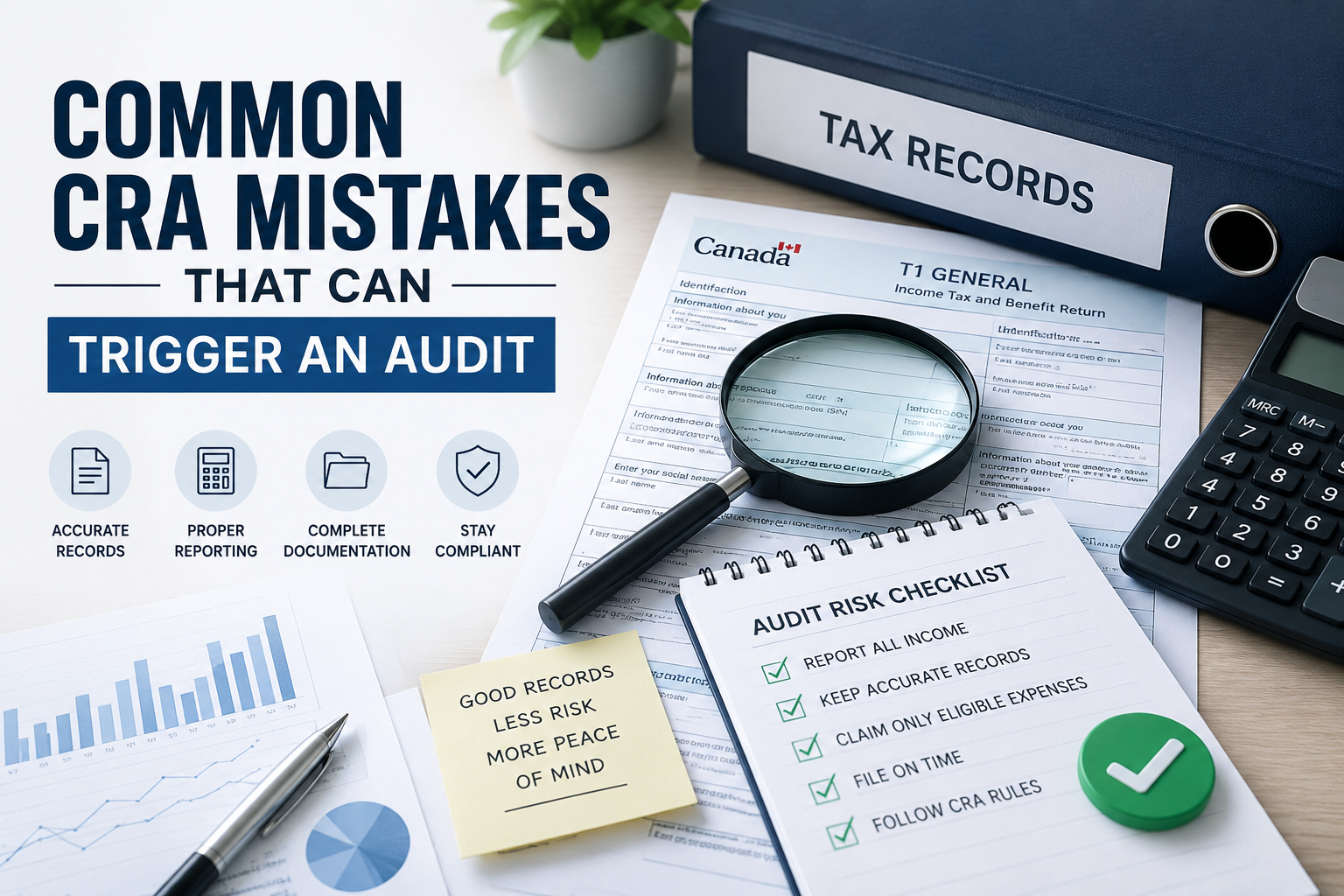
For Canadian business owners, maintaining accurate financial records and complying with Canada Revenue Agency (CRA) requirements is essential. While being selected for a CRA review or audit does not necessarily mean you’ve done something wrong, certain mistakes can increase the likelihood of attracting attention.
Understanding these common issues can help your business remain compliant and avoid unnecessary stress.
1. Reporting Income Incorrectly
One of the most common triggers for CRA reviews is income discrepancies. The CRA compares information from various sources, including T-slips, GST/HST filings, and financial institutions.
Ensure that all business income is reported accurately and consistently across all tax filings.
2. Claiming Excessive Business Expenses
Business expenses must be reasonable, properly documented, and directly related to earning business income. Claiming unusually high deductions compared to industry averages may raise questions.
Common areas that receive additional scrutiny include:
- Vehicle expenses
- Meals and entertainment
- Home office expenses
- Travel expenses
- Professional fees
Always keep receipts and supporting documentation.
3. Poor Record Keeping
The CRA requires businesses to maintain complete financial records for several years. Missing receipts, incomplete bookkeeping, or disorganized records can create challenges during a review.
Good record keeping should include:
- Sales invoices
- Expense receipts
- Bank statements
- Payroll records
- GST/HST documentation
4. GST/HST Filing Errors
Incorrect GST/HST reporting is a frequent issue among small businesses. Common mistakes include:
- Collecting GST/HST but failing to remit it
- Claiming ineligible Input Tax Credits (ITCs)
- Filing returns late
- Incorrectly calculating tax amounts
Regular reconciliation can help prevent these errors.
5. Mixing Personal and Business Expenses
Using business accounts to pay personal expenses can create compliance issues and make bookkeeping more complicated.
Maintaining separate bank accounts and credit cards for business activities helps establish clear financial records and simplifies tax preparation.
6. Payroll Reporting Mistakes
Businesses with employees must accurately calculate and remit:
- Canada Pension Plan (CPP) contributions
- Employment Insurance (EI) premiums
- Income tax withholdings